

The future of business in Saudi Arabia is being shaped around three core pillars: data, technology, and customer experience. Companies that strategically invest in these areas gain higher adaptability and the ability to achieve sustainable long-term growth.
Data has become a strategic asset for modern businesses. By collecting and analyzing data accurately, companies can:
Investing in data analytics tools and artificial intelligence enables companies to make faster, more accurate decisions and turn information into real business opportunities.
Modern technology is more than just tools; it is a means of innovation and growth. Companies leveraging advanced digital solutions such as:
Customer experience has become a central pillar for success. Customers in Saudi Arabia expect:
By combining data and technology, businesses can deliver personalized experiences that increase customer loyalty, retain existing clients, and expand their customer base.
When a company combines data analytics, advanced technology, and a unique customer experience, it can:
Investing in these pillars is an investment in sustainability, competitiveness, and long-term growth, preparing Saudi businesses to face future challenges and seize new opportunities efficiently.
2026-01-08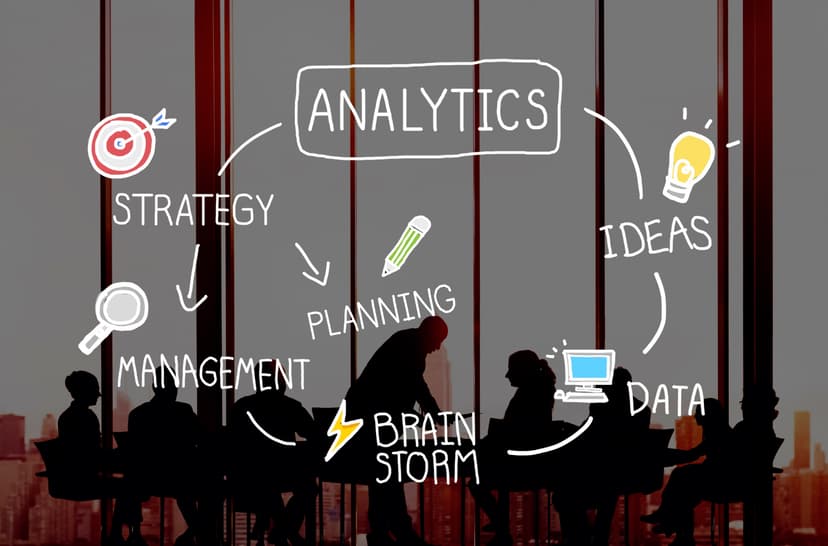
How these elements work together to ensure your project’s success in the digital age
In the era of digital transformation, success no longer depends solely on having a website or a good application. True success is now linked to having an integrated digital system that combines digital marketing, system and application development, and data analysis. When these elements work together in harmony, a business becomes more capable of attracting customers, improving their experience, and making decisions based on accurate data.
Building an integrated digital system helps companies grow faster and more sustainably, while also giving them the ability to adapt to market changes and evolving customer needs.
Digital Marketing: The Gateway to Reaching Customers
Digital marketing is the first step in any successful digital system, as it is responsible for attracting audiences and introducing them to products or services. It includes a variety of tools and strategies such as Search Engine Optimization (SEO), social media management, paid advertising, and content creation.
Effective marketing is not only about increasing the number of visitors; it focuses on attracting the right audience and converting them into actual customers. Therefore, the marketing strategy should be based on a clear understanding of the target audience and their needs.
Technical Development: Building a Strong Digital Experience
After attracting customers, the role of technical development begins in delivering a strong digital experience. This includes developing websites, applications, and internal systems that manage different business operations.
Good development ensures that digital platforms are fast, user-friendly, and secure. A positive user experience plays a major role in increasing customer satisfaction and retention, which directly contributes to business growth and higher sales.
Data Analysis: The Foundation of Smart Decision-Making
Data analysis is the element that connects marketing and development. Through analytics tools, companies can understand user behavior, identify the most visited pages, track traffic sources, and analyze the factors that influence purchasing decisions.
This data helps improve marketing campaigns, develop products and services, and identify new growth opportunities. When decisions are based on data rather than assumptions, results become more accurate and effective.
The Integration of Marketing, Development, and Analytics
The true power of a digital system appears when these three elements work together. Marketing attracts customers, development provides them with a great experience, and analytics delivers insights that help continuously improve performance.
For example, analytics data may reveal that users leave the website on a specific page. In this case, the development team can improve the page experience, while the marketing team adjusts advertising messages to make them clearer and more engaging.
This integration creates a continuous cycle of improvement and optimization, helping the business achieve better results over time.
Conclusion
Building an integrated digital system is no longer optional; it has become essential for any company seeking success in today’s market. Combining digital marketing, technical development, and data analytics enables companies to understand their customers more deeply, enhance their experience, and make strategic decisions based on accurate information.
Companies that invest in this digital integration become more competitive and better prepared to grow in an ever-changing business environment.

In recent years, the gaming industry has seen a tremendous leap in popularity, innovation, and profits. With the growing global demand for video games, game development has become one of the most sought-after specialties in the world of programming.
But what is the relationship between programming and game development? And how does programming contribute to building amazing games that attract millions of players around the world? This is what we will explore in this article.
1. What is Game Development?
Game development is the process of designing, programming, and testing video games. This process involves several stages, beginning with the idea, then graphic design and programming, and ending with the game's launch.
2. The Role of Programming in the Gaming Industry
Programming is the backbone of any video game. Programmers write the code that controls character movement, game rules, player interaction, and artificial intelligence.
✅ Examples of in-game programming functions:
Controlling game physics (such as gravity or collisions)
Programming artificial intelligence for enemies
Creating user interfaces (UI)
Seamlessly integrating sound and motion
3. Game Engines: Integrated Programming Tools
Game engines are integrated development environments used to build games faster and easier. These engines provide ready-made tools for graphics, physics, programming, and audio.
🎮 The most popular game engines:
Unity: Built on C#, it's widely used for developing mobile and virtual reality games.
Unreal Engine: Powerful in graphics, used in large AAA games, and built on C++ and Blueprint.
4. Why is game development such a promising future?
💰 Huge financial returns: The gaming industry exceeds $200 billion annually.
🌍 Global audience: Video games attract players of all ages and cultures.
💡 Creativity and technology: It combines art, programming, and innovation.
📈 Various job opportunities: game developer, graphic designer, quality tester, interactive script writer, and more.
5. How to get started in game programming?
If you're interested in combining your passion for gaming with programming, start with these steps:
Learn a programming language like C# or C++
Download a game engine like Unity or Unreal
Start with small projects (such as a simple game)
Take courses or enroll in platforms like Coursera or Udemy
Join game developer communities and participate in gaming events
The bottom line: Programming creates imaginary worlds
Ultimately, game development isn't just a hobby; it's a full-fledged field that combines technology and creativity. Using programming, developers can build imaginative worlds, transform ideas into dynamic interactions, and influence millions of players.
If you're looking for a vibrant and innovative programming field, game programming is the future you should start with today.

Web Development: Basics and Future Trends: Website development is the process of building and maintaining websites. It includes user interface (UI) design, back-end programming, and database management. Website development relies on core technologies such as HTML, CSS, and JavaScript, as well as frameworks such as React and Vue.js to speed up the development process.
Key Technologies Used:
HTML/CSS/JavaScript: To design and structure the website and make it interactive.
Frameworks: Such as React.js and Node.js for UI development and back-end programming.
Databases: Such as MySQL and MongoDB for data storage.
User Experience (UX) Design:
UX and UI design are essential factors for the success of any website. A website must be user-friendly and responsive to ensure user satisfaction.
Future Trends:
Responsive Design: To ensure the website is compatible with all devices. Artificial Intelligence: To improve content personalization and user experience.
Security: Focus on protecting personal data and securing the website.
Cloud Computing and Serverless Computing Technologies: For Flexible Website Development at a Lower Cost
Performance Improvement: For Faster Page Loading
Conclusion:
Website development is a constantly evolving field. With the use of modern technologies, such as artificial intelligence, and an increasing focus on security and performance, websites remain an essential tool for future digital presence.

Clear Steps to Turn Ideas into Successful Digital Solutions
In the world of digital transformation, executing digital projects is no longer just a technical process. It has become a strategic process that requires careful planning and collaboration between multiple disciplines. The success of any digital project depends on having a clear methodology that ensures goals are achieved efficiently while delivering solutions that meet the needs of clients and the market.
Our methodology for executing digital projects is based on a set of organized stages that begin with understanding the idea and end with launching the digital solution and continuously improving it.
Understanding Client Needs and Defining Goals
Every successful process begins with a deep understanding of the client’s needs and the nature of the project. In this stage, we focus on analyzing the idea, defining the project’s objectives, and understanding the target audience. We also study the challenges the client faces and the opportunities available in the market.
This step helps us build a clear vision for the project and determine the right direction before starting the implementation.
Market Analysis and Strategy Development
After understanding the project requirements, we move to the stage of analyzing the market and competitors. The purpose of this stage is to understand the environment in which the project will operate and identify potential opportunities and challenges.
Based on this analysis, a comprehensive digital strategy is developed that includes both technical and marketing aspects to ensure the best possible results.
Design and User Experience
Design is one of the most important factors in the success of any digital project. In this stage, we focus on building a simple and clear user experience that helps users interact easily with the platform or application.
We design attractive interfaces that combine visual appeal with ease of use, enhancing the user experience and increasing the chances of achieving the project’s goals.
Development and Technical Implementation
After the design is approved, the development team begins transforming ideas and designs into practical digital solutions. This includes developing websites, applications, and various digital systems using the latest technologies.
During this stage, the system is continuously tested to ensure its efficiency, speed, and security before the official launch.
Testing and Launch
Before launching the project, comprehensive tests are conducted to ensure that all functions work properly and that the user experience is smooth and free of issues.
After that, the project is officially launched, with performance closely monitored during the initial stages to ensure the desired results are achieved.
Analysis and Continuous Improvement
The work does not end after the project is launched. The most important stage is monitoring performance and analyzing data to understand user behavior and identify opportunities for improvement.
Based on these insights, we continuously develop and improve the system to ensure optimal performance and sustainable growth for the project.
Conclusion
Successfully executing digital projects requires more than just technical development. It requires a clear methodology that combines strategic planning, effective design, technical execution, and continuous analysis.
Through this integrated methodology, ideas can be transformed into successful digital projects that deliver real value to clients and help businesses grow in the ever-evolving digital environment.
2026-03-11
Why It’s Not Enough for Your Website to “Just Work”
Your website may be technically compatible with all devices and browsers, fast-loading, and free of coding errors — yet it still fails to deliver the results you expect. No sales. No engagement. No meaningful time spent by visitors.
The issue here isn’t technical compatibility. It’s user experience.
In this article, we’ll explain why it’s not enough for your website to simply function properly — and how you can improve user experience even when everything seems technically perfect.
1. Technical Compatibility Doesn’t Equal Emotional Comfort
Your development team may ensure the site runs smoothly across browsers like Google Chrome and Safari, and that it’s fully responsive across devices.
But does that guarantee users feel comfortable while navigating it?
Not necessarily.
User experience is about clarity, ease, and emotional comfort — not just whether buttons work correctly.
2. Clarity of Message Is More Important Than Code
When visitors land on your website, they immediately ask themselves:
If they can’t find clear answers within the first five seconds, they’ll leave — no matter how advanced your technology is.
Solution:
3. Reduce the User’s Mental Effort
The more users have to think, the more likely they are to leave.
Long menus, too many choices, or complicated steps create cognitive overload.
A strong user experience means:
Ask yourself: Can this process be completed in three steps instead of six?
4. Visual Design Directly Impacts Trust
Even if your site is fast and technically sound, a cluttered or inconsistent design reduces credibility.
Whitespace, color balance, typography, and layout structure all shape perception.
Visitors may not consciously analyze design details — but they feel them.
And that feeling determines whether they stay or leave.
5. Speed of Access Matters as Much as Loading Speed
Many businesses focus only on loading speed. But there’s another kind of speed that matters:
Speed of access to information.
Can users find what they’re looking for within seconds?
Are your call-to-action buttons visible?
Is the contact page easy to reach?
If not, your user experience needs improvement — even if your technical performance is excellent.
6. Consistency Builds Confidence
Consistency in colors, fonts, and layout creates a sense of stability.
Frequent visual changes between pages create confusion.
A strong user experience relies on a predictable, structured design system.
7. Test With Real Data — Not Assumptions
Many teams build websites based on internal assumptions.
True improvement begins when you analyze real user behavior using tools like Google Analytics.
Monitor:
Data reveals gaps that code alone cannot show.
How to Improve User Experience Practically
Conclusion
Technical compatibility is the foundation — but it’s not the finish line.
A successful website isn’t just one that runs without errors. It’s one that makes users feel clarity, ease, and trust.
If your website performs technically but fails to convert, it’s time to look beyond code and focus on experience.
Improving user experience isn’t a cosmetic upgrade — it’s a direct investment in conversions and sustainable digital growth.

![[object Object]](/_next/static/media/arrow-left-white.942fbd51.svg)
.5d180d32.svg)
.83d198d9.svg)