
How Good User Experience and User Interface Design Affect Your Profits
In the world of digital business, it’s not enough to have just a beautiful website or application. It must also be easy to use and effective in guiding customers toward making a purchase decision. This is where the concepts of UX and UI come into play. They are among the most important elements for the success of any digital project. Although the two terms are sometimes used interchangeably, each has a different role and a direct impact on sales.
In this article, we explore the difference between UX and UI, and how each one influences customer experience and revenue growth.
First: What is UX (User Experience)?
UX, or User Experience, refers to the overall experience a user has while interacting with a website or application.
UX focuses on the overall feeling a customer has after using a digital product.
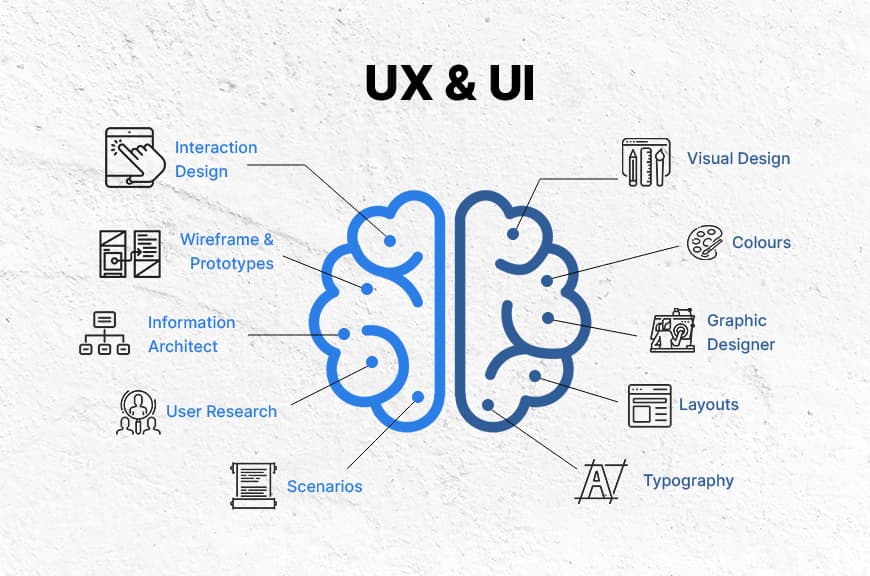
UX includes elements such as:
Ease of navigation between pages
Website loading speed
Clarity of purchase steps
Simplicity of registration or payment processes
Solving potential user problems
In other words, UX is concerned with how the website works and how smooth and comfortable the experience feels.
Example:
If a customer visits your online store, quickly finds the product within seconds, and completes the purchase easily, this means you have a good user experience.
Second: What is UI (User Interface)?
UI, or User Interface, refers to the visual design that users see and interact with.
UI includes elements such as:
Colors
Fonts
Buttons
Images
Page layout
Overall visual identity
UI focuses on appearance and visual attractiveness—how the website or application looks to users.
Example:
A clearly visible “Buy Now” button in a distinctive color, along with a consistent and elegant design, reflects brand professionalism and captures customer attention.
Third: The Core Difference Between UX and UI
The difference can be simplified as follows:
UX focuses on function and feeling: Is the experience easy? Is the user comfortable?
UI focuses on appearance: Is the design attractive? Are the elements visually clear?
UX determines how the system works, while UI determines how it looks.
True success happens when both work together in harmony.
Fourth: How Does UX Affect Sales?
A good user experience leads to:
Reduced bounce rates
Increased purchase completion rates
Fewer abandoned shopping carts
Higher customer satisfaction
When the customer journey is simple and clear, the likelihood of converting visitors into paying customers increases.
Fifth: How Does UI Affect Sales?
An attractive user interface leads to:
Capturing attention from the first moment
Building trust in the brand
Improving first impressions
Guiding users toward important buttons and actions
Professional design reflects product quality and gives customers a sense of security during the purchase process.
Sixth: What Happens When One Is Neglected?
A beautiful design (strong UI) with a poor experience (weak UX) leads to user frustration despite visual appeal.
An excellent experience (strong UX) with poor design (weak UI) may weaken trust in the brand.
In both cases, the result is lost sales opportunities.
Conclusion
UX and UI are not separate elements—they are two sides of the same coin in the success of any digital project.
UX ensures ease and smooth usability.
UI ensures attractiveness, trust, and a positive impression.
When a well-planned user experience is combined with an appealing interface, visits turn into sales, and customers become brand advocates.
Investing in UX and UI is not a cosmetic improvement—it is a direct strategy for increasing profits and driving business growth.

![[object Object]](/_next/static/media/arrow-left-white.942fbd51.svg)
.5d180d32.svg)
.83d198d9.svg)