
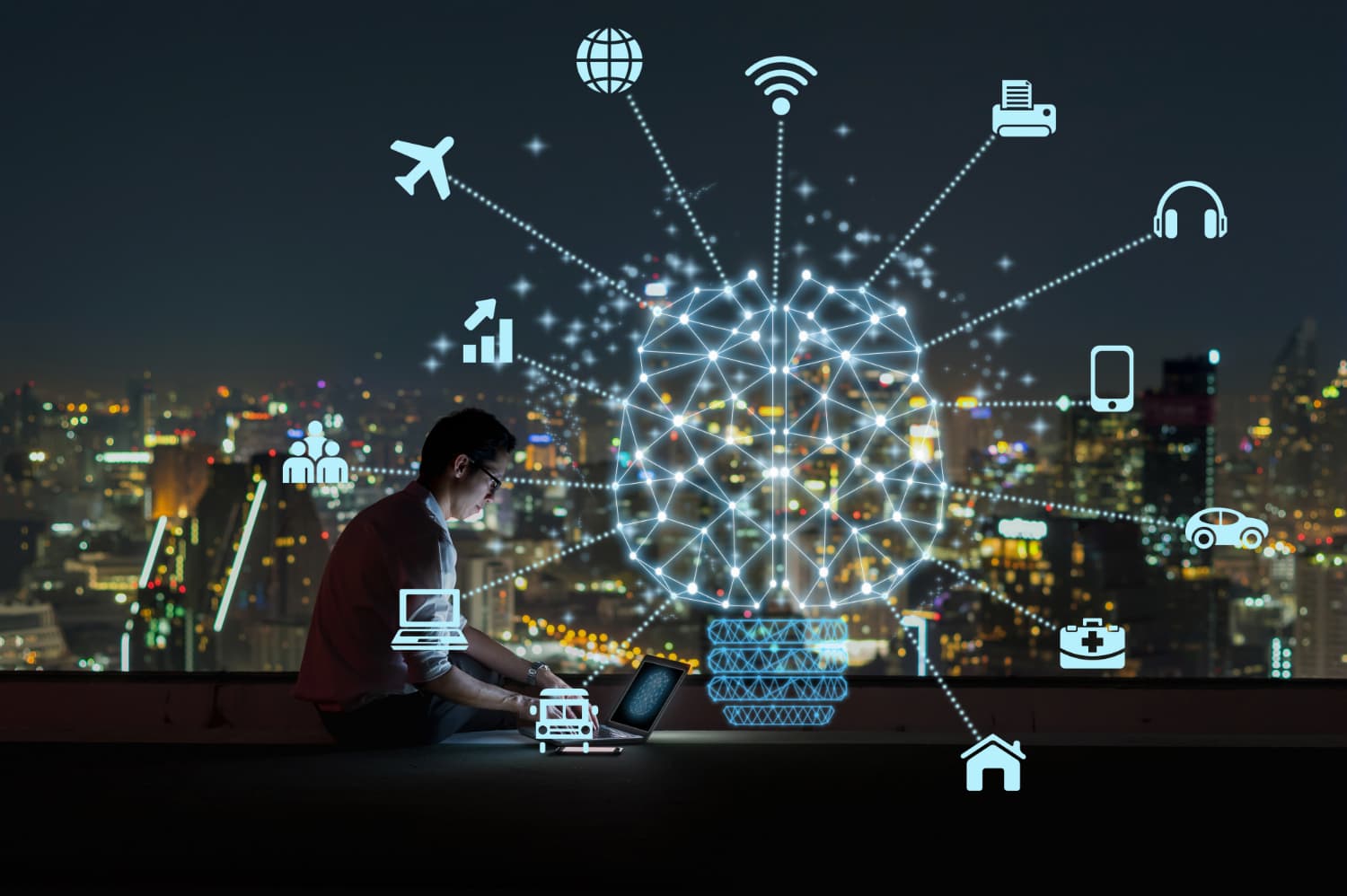
The Internet of Things (IoT) is a technical concept that refers to the connection of everyday devices and objects to the internet to exchange data and information. Thanks to the IoT, devices such as phones, cars, home appliances, and even industrial machines are able to communicate with each other, enabling them to collaborate intelligently and achieve higher performance.
How does the IoT work?
The IoT relies on smart devices equipped with sensors, software, and communication tools that enable them to collect, process, and share data across networks.
For example, a smart home device can automatically monitor and adjust the temperature, sending the data to the user via their mobile phone.
IoT components:
Connected devices: such as sensors, cameras, and smart assistants.
Communication networks: such as Wi-Fi, Bluetooth, and 5G networks.
Data and analytics: Analyzing the extracted data to improve performance.
IoT applications in everyday life
The Internet of Things has become an integral part of our daily lives. Here are some amazing applications:
Smart Homes:
Using smart home management systems like Alexa or Google Nest, you can remotely control lighting, temperature, and home appliances.
Smart Health:
Wearable devices, such as smartwatches, monitor your health and provide real-time data, such as heart rate, oxygen levels, and blood pressure.
Smart Cities:
Cities can use the Internet of Things to manage traffic, optimize energy consumption, and provide more efficient services to citizens.
Industry 4.0:
In manufacturing, smart sensors and robots help monitor performance, track inventory, and provide predictive maintenance.
Importance of the Internet of Things for Business
The Internet of Things is a key pillar for improving performance and creating new business opportunities. Through continuous connectivity and data analysis, organizations can:
Improve operational efficiency:
Get real-time insights into how systems are working and optimize them.
Reduce costs:
By monitoring energy consumption, tracking inventory, and performing proactive maintenance.
Service Innovation:
Opening new avenues for innovative service delivery and improving customer experience.
Challenges Facing the Internet of Things
Despite the many benefits of the Internet of Things, there are some challenges that may hinder its development and deployment, most notably:
Security and Data Protection:
Many devices are connected to the Internet, making them vulnerable to cyberattacks.
Therefore, robust data protection technologies are essential.
Privacy:
Collecting data from multiple devices may raise concerns about user privacy, necessitating the development of laws and regulations to protect rights.
Device Compatibility:
With the diversity of companies and products, users may face difficulties ensuring that devices work together.
The Future of the Internet of Things: Where Are We Headed?
With continued technological innovations in the field of the Internet of Things, the future is expected to witness tremendous development.
In the coming years, connected devices will become an essential part of our daily lives in all areas, from healthcare to transportation and education.
The Internet of Things is the future that connects the entire world, making our lives more convenient and smart.

![[object Object]](/_next/static/media/arrow-left-white.942fbd51.svg)
.5d180d32.svg)
.83d198d9.svg)